
UNDERSTANDING THE SOUTHERN RESIDENT ORCAS
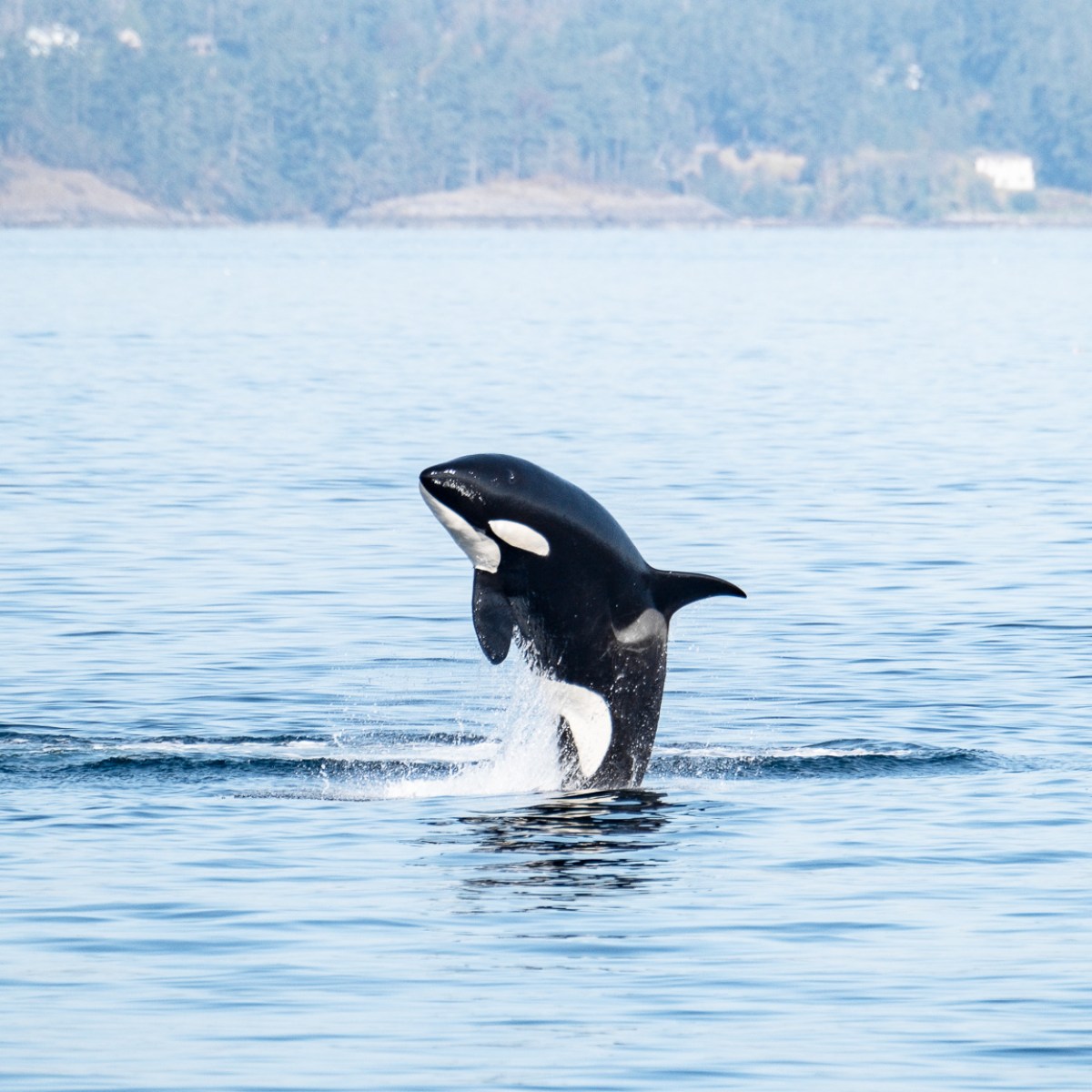
The Southern Residents are the smaller of the two populations of resident orcas found along the British Columbia coast. These orcas tend to frequent inland coastal waters during the spring, summer, and fall months, including regions such as the Strait of Juan de Fuca, Puget Sound, the Strait of Georgia, and Haro Strait. Their movements are influenced by seasonal prey availability and are closely monitored for conservation purposes.
INSIDE THE WORLD OF SOUTHERN RESIDENT ORCAS
However, they have been seen as far south as central California and as far north as the Queen Charlotte Islands. Their favourite location tends to be off the western side of San Juan Island, WA. The orca come to these areas because they are following the runs of salmon who are heading to freshwater rivers to spawn. Although resident orca do eat a variety of salmon species, chinook salmon represent 78% of their diet! Because of this populations predictable movements from April to November, they are the most highly studied orca population in the world. Most of the information that we know about orca comes from studies of this population.
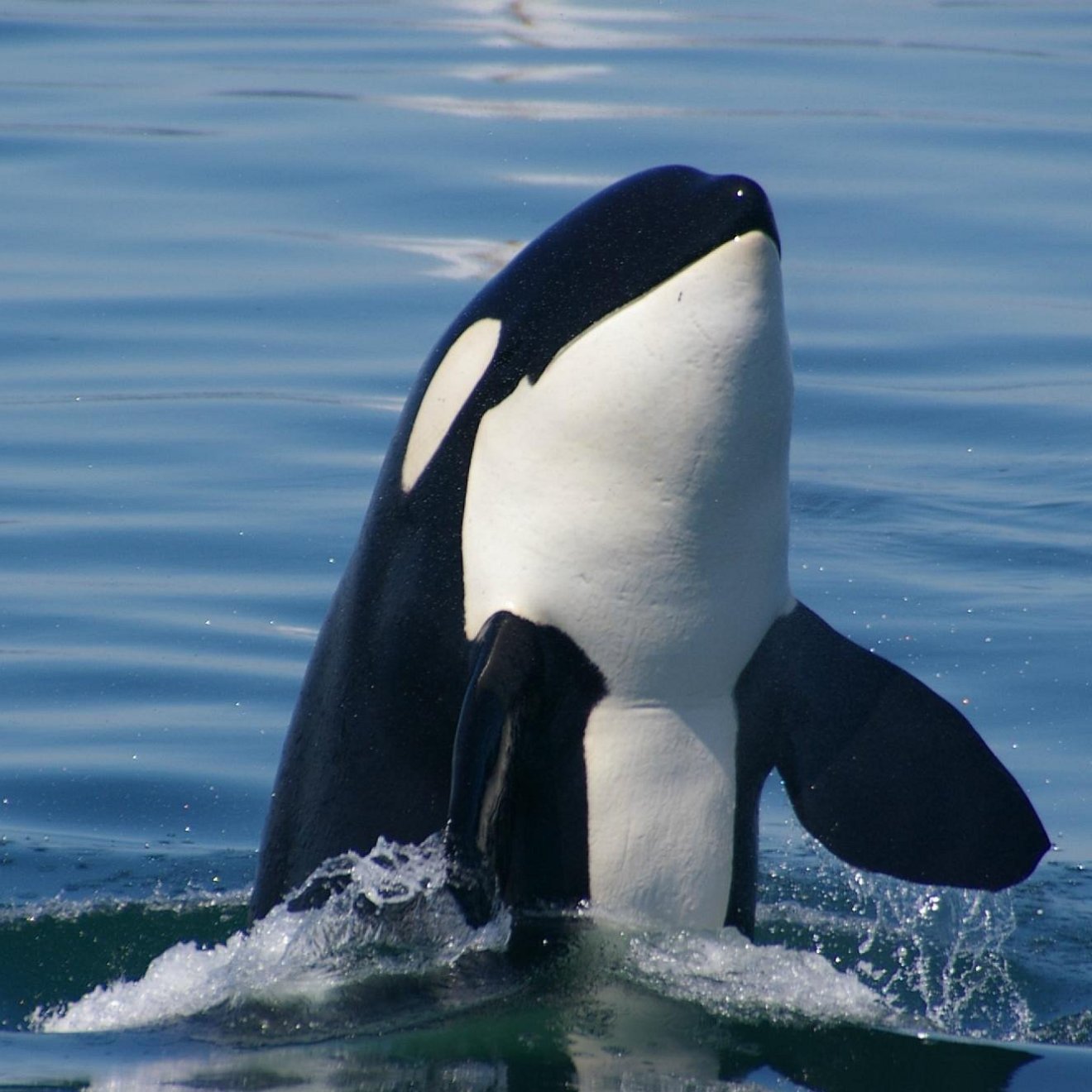
The Southern Resident community is made up of 89 whales, divided into 3 pods named J, K, and L. Because all the pods have related dialects, they fall into one clan, known as J Clan. J-pod has 28 members, K-pod has 20 members, and L-pod has 40 members. A pod consists of several matrilines that are related. The eldest female of a matriline guides the family, as orcas are a female dominated species. A matriline will contain a female, all of her male and female offspring, and all of their progeny. The largest matriline in the Southern Resident community spans 5 generations! Talk about a big family reunion!
The newest addition to the Southern Residents came as an early Christmas gift on December 17th, 2011. This new baby is known as J-48, as he or she is the 48th whale to be identified in J-pod. Orca calves have a 50% chance of surviving the first 6 months of life, so everyone is keeping a watchful eye on this precious baby. J-48 has a great chance of survival, as her seasoned mother, J-16 or more commonly known as Slick, has had 4 previous children who all survived infancy. The reason for the high mortality rate in orca calves is contaminated breast milk. Resident orca live in a highly polluted environment, the most harmful chemicals being PCBʼs, DDT, PCBDEʼs, mercury, and other heavy metals. These toxins suppress the immune system, cause cancers, birth defects, and reproductive problems. The orca accumulate these toxins from their food and store them in fat tissue. As breast milk is 35%-50% fat, mothers pass the toxins to their offspring.
The first whale to ever be identified among the Southern Residents was Ruffles or J-1. Ruffles was the icon of the Southern Residents for 3 decades due to his 6-foot dorsal fin that had a prominent wavy appearance on its trailing edge. He is known as the most photographed wild orca in the world! Sadly Ruffles died at the end of 2010, as he did not return with J-pod last summer. The good story is that Ruffles was the oldest known resident male orca, reaching the ripe age of 59. Not only did he amaze everyone who laid eyes on him, he left many children behind who will hopefully possess his unique looks and personality! Recent DNA studies show that this handsome stud fathered many of the whales in the population today.
Closest to Ruffles was Granny or J-2. Granny and Ruffles were somehow closely related, though we will never be sure of the actual connection. Granny is an impressive lady, as she is the oldest known orca in the entire world! She has shown no signs of slowing down as she approaches her 101st birthday this coming summer! I know what you are thinking….WOW, that is amazing! Granny is amazing and very well respected. She is the matriarch leader of J-pod, always leading the group and making decisions about when and where to travel to get to the best food source, how fast to go, and when to rest or socialize. She is very easy to recognize with her solid saddlepatch and half- moon shaped nick out of the trailing edge of her dorsal fin.
Other iconic whales belonging to the Southern Residents include J-8 or Spieden, who makes a funny wheezing sound when she surfaces and exhales. She is also one of the oldest whales in the community, estimated to have been born in 1933! Cappuccino (K-21) and his sister Raggedy (K-40) are a famous pair in K-pod. Rarely do you see one without the other close by. Raggedy is the oldest offspring in their family, born in 1963, and Cappuccino is the youngest sibling in the family born in 1986. They are the only surviving members of their matriline, so they are very close to eachother. Raggedy can be picked out of a cluster of whales in a heart beat because the back edge of her dorsal fin is ragged looking (thus the name Raggedy) with many nicks in it. Cappuccino is the most iconic male orca in K-pod, with his very recognizable open saddlepatch. The easiest member of L-pod to spot has to be L-41 or Mega. Mega is now the oldest and largest male in the entire Southern Resident community. He has an enormous dorsal fin and a distinguishing nick near the top of his dorsal fin. Mega is always accompanied by his family, the L-12 matriline. His grandmother is the famous Alexis (L12), he has two sisters Matia (L-77), and Calypso (L-94), and his young niece Cousteau, born in 2009. All of the whales in the Southern Resident community have unique personalities and it is an amazing experience to get to know them all!
A majority of all of the information about the Southern Resident orca population has been collected by the Centre for Whale Research, located on San Juan Island, WA. You know you came to the right place to watch orcas when the orca research station sets up shop next door! Ken Balcomb III started the research station in 1971, and continues to be the director and head biologist at the station. The Centre for Whale Research keeps a photo identification catalogue and history of all the whales in this population, conducting annual population surveys and other valuable studies. Another related place you must put on your visit list is the Whale Museum, also located on San Juan Island. Both organizations work together to collect data on the whales, educate the public, and fund research and conservation efforts to protect the Southern Resident population.
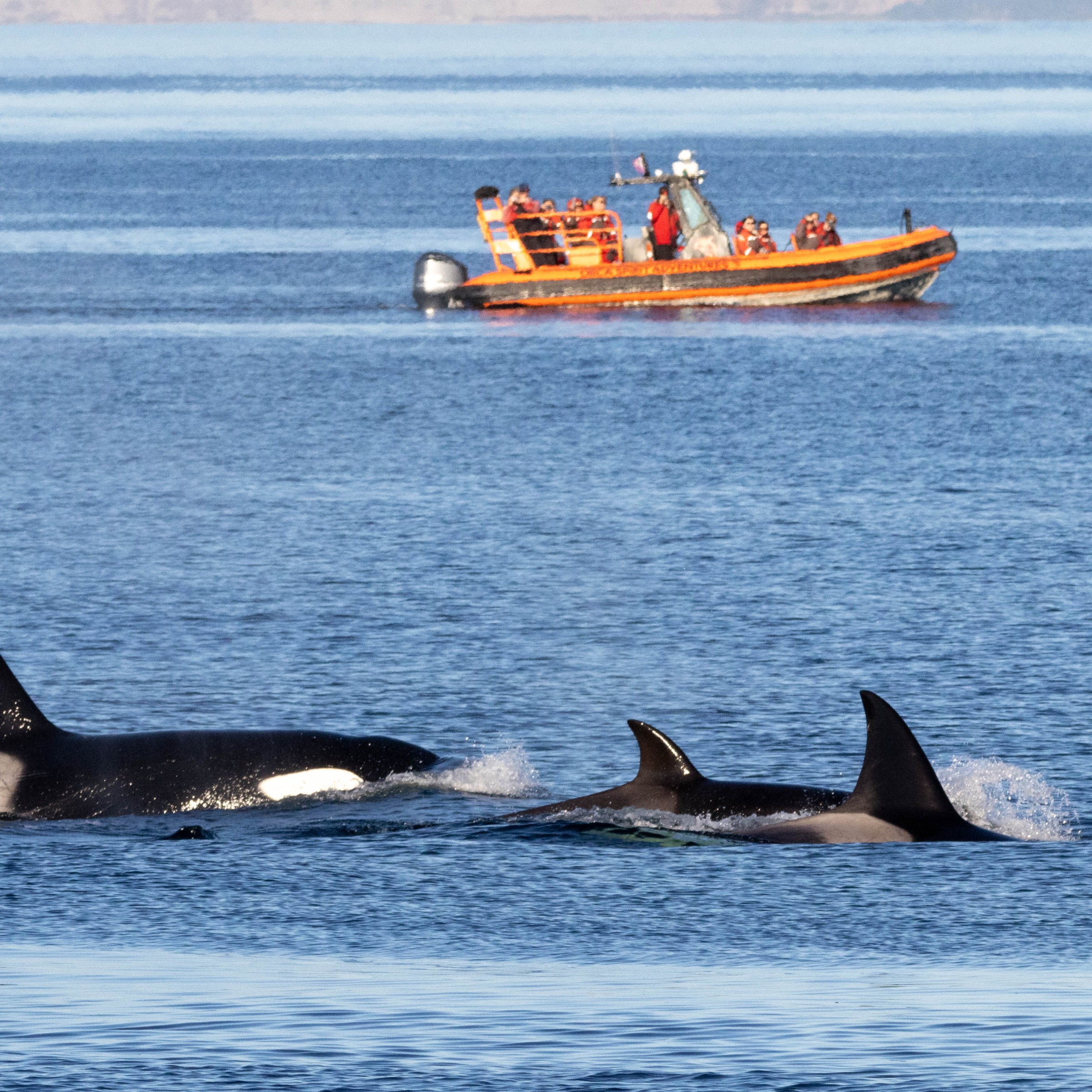
In 2005, both the U.S. Fish and Wildlife Service and COSEWIC (Committee On the Status of Endangered Wildlife in Canada), listed the Southern Residents as Endangered. During the 1960ʼs and 1970ʼs, the majority of orcas taken from the wild to put on display in aquariums unfortunately came from the Southern Resident community. A total of 68 family members were removed, leaving only 71 whales left by 1973. Today the Southern Residents face threats from food shortages, pollution, boat traffic noise and negative effects of inbreeding depression. Much effort is being made by both US and Canadian governments, non-governmental groups, and the general public to protect the Southern Residents and the habitat they live in. Ask your naturalists how you can get involved in conservation efforts to protect this amazing community of orca!
EXPERIENCE THE WILD
Join us on an exhilarating whale and wildlife watching tour and experience the magical wildlife of the Salish Sea firsthand.