
The Wonders of Humpback Whales: Exploring Their Unique Physical and Behavioural Traits
The Uniqueness of Humpback Whales
The humpback whale is highly recognizable from both above and below the surface, with distinctive features that set it apart from other species. Many people are curious about why the humpback whale is so unique, with its long pectoral fins, funky hump-like shape, and its lumpy, bumpy skin texture. Here, we will dive into the distinctive features of the humpback whale, and why this magnificent species is so unlike their whale counterparts.
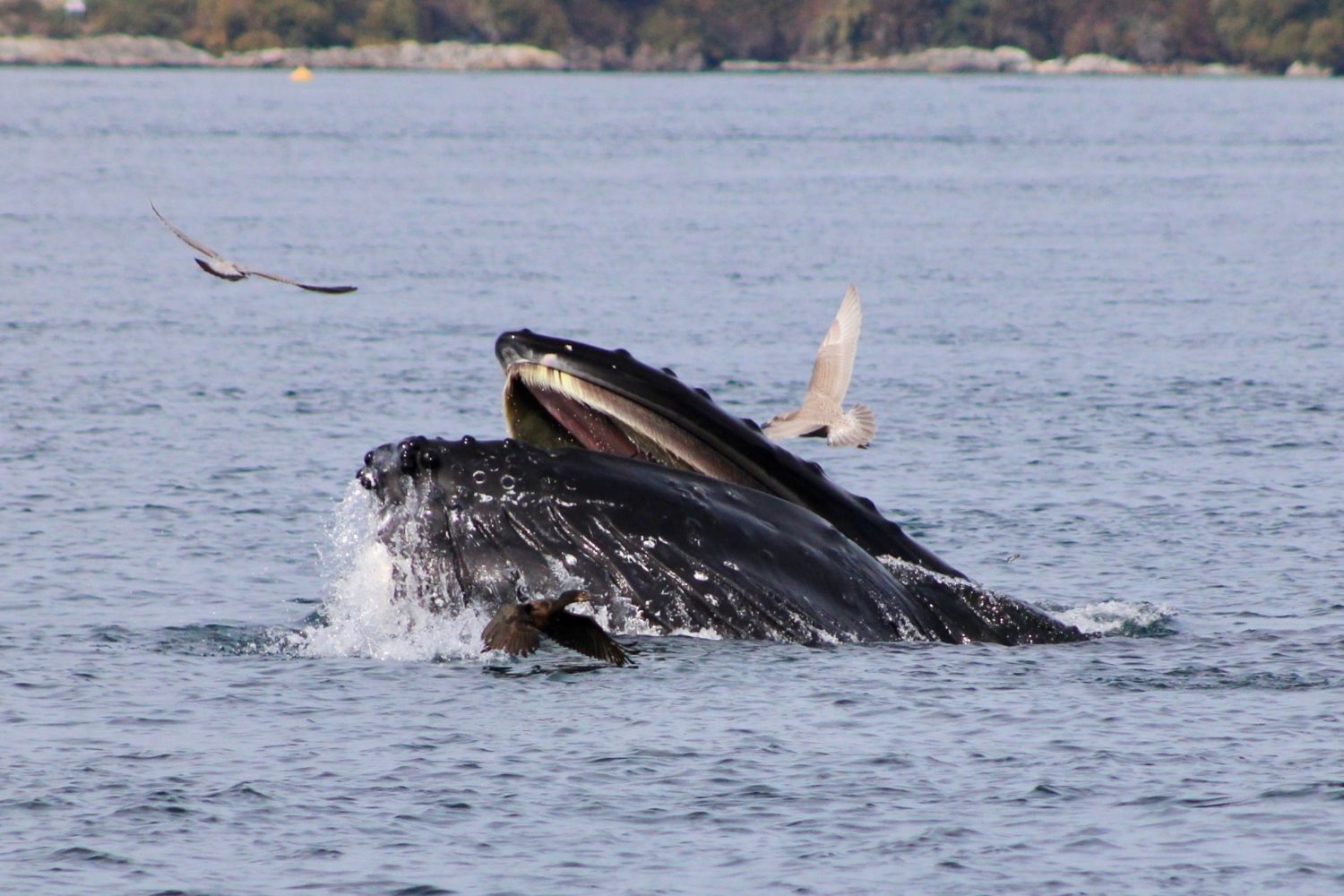
Their common name, humpback, derives from both the shape of their back when it breaks the surface just before a deep dive, and the pronounced hump-like base at the leading edge of their dorsal fin.
Humpback whales are distinguishable by their exceptionally long pectoral fins, which can measure up to one-third of their body length, averaging 5 meters. This makes them the longest appendages of any living animal, on land or in the sea! Their scientific name, Megaptera novaeangliae, meaning “Big wing of New England,” refers to these large, wing-like fins and their initial sighting by whalers off the New England coast. These impressive fins contribute to the humpback whale’s remarkable agility, allowing them to turn within their own body length, much like smaller, more nimble dolphins.
The expansive surface area of their fins also allows for some unique designs and colouration! Much like their tail flukes, the humpback whale pectoral fins can range from completely white in colouration to completely black, and anywhere in between. They can sometimes even feature what seems like golden paint splotches sprinkled around their fins and bellies. This is caused by single-celled microscopic algae known as diatoms that coat their skin. This coating is typically a sign that the whale’s skin regeneration has slowed, likely due to colder water temperatures.
Why are humpback whales so bumpy and lumpy?
As you can see from the photo above, the anterior edge of the pectoral fin features a pattern of knobby protuberances known as tubercles. These tubercles have two primary functions depending on their location on the whale’s body. On the fins, they help direct the flow of water by decreasing drag and promote lifting, thus giving the humpbacks their acrobatic abilities. The second location of these tubercles is on their heads, specifically on their rostrum and lower jaw. The tubercles contain single, short, whisker-like hairs called vibrissae which are connected to a dense network of nerves. Though their exact function is not fully understood, they are thought to provide sensory information such as vibrations in the water to the whale.
Humpback whales are renowned globally for whale watching, not only due to their unique physical traits but also because of their extraordinary array of social behaviours displayed at the ocean’s surface.
They are very curious and active whales, often exhibiting behaviours like spyhopping, breaching, pectoral slapping, tail lobbing, and unique feeding patterns such as lunge and bubble-net feeding. Bubble-net feeding is a hunting strategy that involves the whales blowing a curtain of bubbles to disorient and ensnare schools of fish.
With more and more humpback whales migrating to this part of the world as the population rebounds, we are excited to see more of their physical uniqueness and charismatic personalities delighting the Salish Sea!
Sources:
|
Friday, N., Smith, T. D., Stevick, P. T., & Allen, J. (2000). Measurement of photographic quality and individual distinctiveness for the photographic identification of humpback whales, Megaptera novaeangliae. Marine Mammal Science, 16(2), 355-374.
|
| National Geographic Partners, LLC. (n.d.). Humpback whale: Facts and photos. National Geographic. https://www.nationalgeographic.com/animals/mammals/facts/humpback-whale |