Written by: Jessie Leo
Orca Spirit Adventures is currently symbolically adopting the J17 Matriline with the Wild Killer Whale Adoption Program through Ocean Wise. The purpose of the program is to raise awareness and support conservation-oriented research and education efforts focused on the endangered southern resident killer whale population. By adopting the matriline, Orca Spirit is supporting research that helps monitor killer whale populations and develop strategies to protect their habitat.
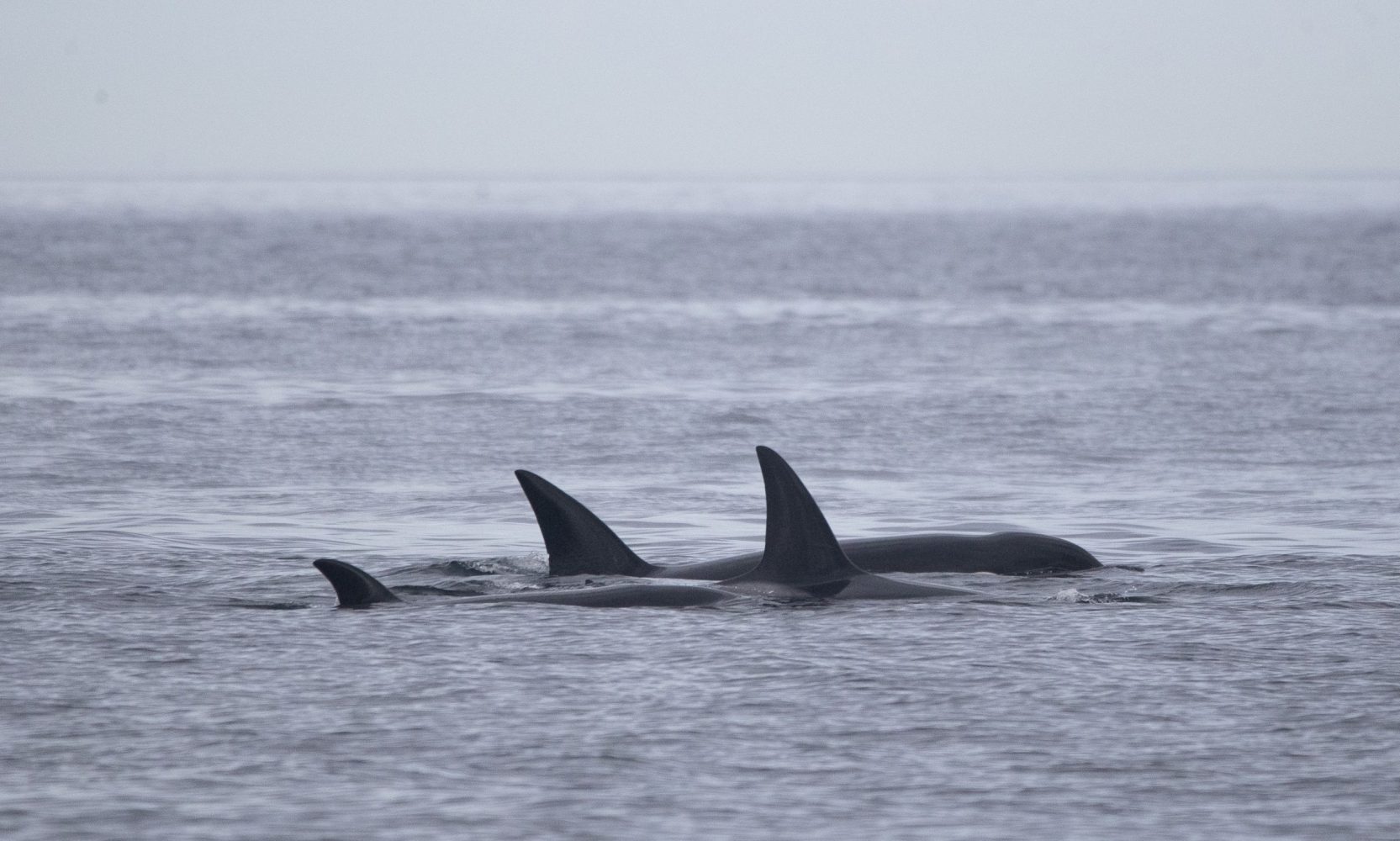
Photo courtesy of Ocean Wise Killer Whale Adoption Program
Why funding the Killer Whale Adoption Program is so important:
69% of southern resident killer whale pregnancies are unsuccessful. Even for calves that survive, threats are abundant, from critically low Chinook salmon stocks to vessel noise that makes it hard for their pods to find food.
But there’s another hidden danger: Polychlorinated biphenyls (PCBs). These pollutants sneak into the ocean from industrial activities and city runoff, building up in the whales’ fatty bodies as they eat their way up the food chain. When whales burn fat, PCBs mess with reproduction and can even pass from mother to calf through milk. Calves exposed to these toxins through their mother’s milk end up with weak immune systems, making them super vulnerable to illness.
We still need more research to fully understand how PCB pollution and low prey impact these whales, and if these issues are connected. But the symbolic adoption fees from the Wild Killer Whale Adoption Program will fund vital studies. This research aims to collect crucial data on:
- Toxicant exposure levels in calves
- Overall toxicant levels in the population and their prey
- Prey availability
The J17 Matriline: A dynamic group and the face of the Southern Residents in media
The J17 matriline belongs to one of three southern resident pods of killer whales known as J pod. The head of the matriline, Princess Angeline (J17) was born in 1977 and was named after the oldest daughter of Duwamish elder Chief Seattle, Kikisoblu, due to the close connection between the Indigenous peoples and the killer whale. The city of Seattle is, of course, named after the elder.
J17 Princess Angeline with her calf, J53 Kiki – Photo courtesy of Monika Wieland Shields and the Orca Behavior Institute.
Unfortunately, Princess Angeline, the orca, passed away in 2019, leaving behind three surviving offspring: Tahlequah (J35), Kiki (J53), and Moby (J44). Tahlequah became well-known globally for her “tour of grief” in 2018, a heartbreaking display of sorrow following the death of her newborn calf. She was observed carrying her calf for seventeen days, the display educating the world about the grim reality of malnourishment and PCB pollution faced by this at-risk population.
J35 Tahlequah in the news.
Many fans of the 1993 film Free Willy may not know that several whales featured in the movie belong to the J17 matriline. Princess Angeline, Tahlequah, and their family members are the stars of the film’s breathtaking wild whale sequences. Knowing the history of these whales and the environmental threats they face today — including salmon availability, toxins, and reproductive issues — can give viewers a new perspective when rewatching the film.
We encourage you to look into symbolically adopting a killer whale or a matriline through the Wild Killer Whale Adoption Program if you are searching for ways to support conservation and research projects!
References
Wasser, S. K., Lundin, J. I., Ayres, K., Seely, E., Giles, D., Balcomb, K., Hempelmann, J., Parsons, K., & Booth, R. (2017). Population growth is limited by nutritional impacts on pregnancy success in endangered Southern Resident Killer Whales (Orcinus orca). PLOS ONE, 12(6). https://doi.org/10.1371/journal.pone.0179824
Mongillo, T. Mishael et al. (2016). Exposure to a mixture of toxic chemicals: implications for the health of endangered southern resident killer whales. http://doi.org/10.7289/V5/TM-NWFSC-135apaaapaap